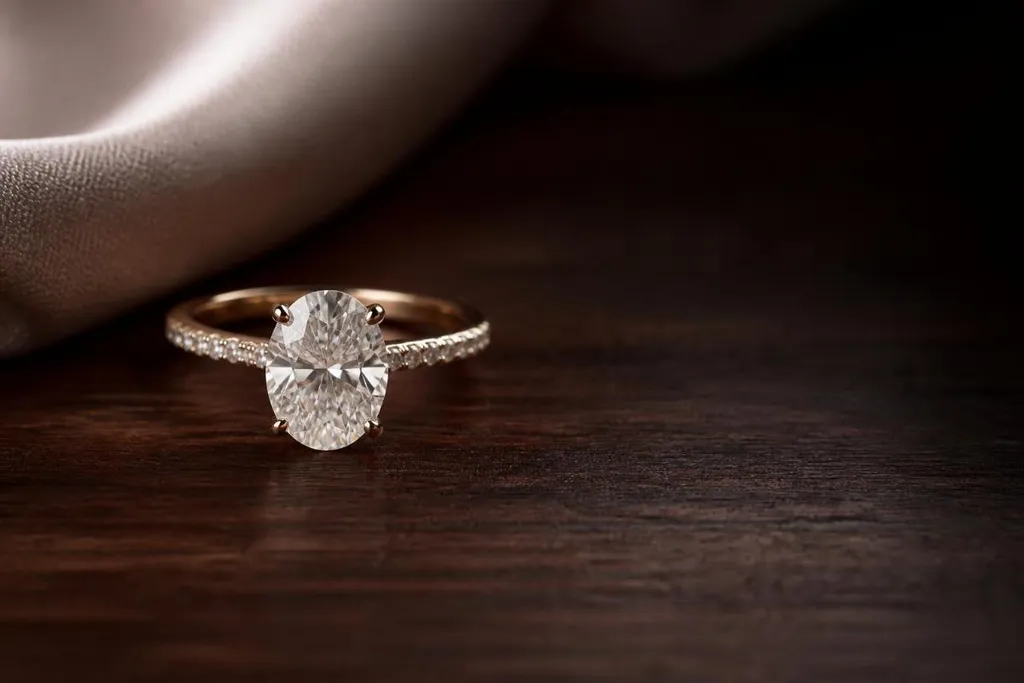
Diamond-set shoulders are often designed around perfect repetition identical stones, evenly spaced, following the band in a disciplined line. Scatter setting takes a more expressive approach. By varying the placement of smaller diamonds around an oval centre stone, the ring can feel less formal and more organic, while still delivering noticeable brilliance. In platinum, the effect remains refined because the naturally white metal provides a quiet backdrop for both the centre diamond and the scattered accents.
For someone interested in this less conventional approach, the option to order the Allure engagement ring from Lily Arkwright demonstrates how an oval lab-grown diamond, platinum setting and scatter-style shoulder detailing can form a cohesive design. Instead of creating a uniform path of diamonds along the band, the smaller stones add irregular points of light that give the ring its individual character.
Why Scatter Setting Feels More Organic
Traditional pavé is appealing because of its precision. Small diamonds are arranged closely and consistently, producing an almost continuous line of sparkle. Scatter setting deliberately creates a different rhythm.
Spacing between stones allows more of the metal to remain visible. Depending on the design, diamonds may also vary in size or position, creating the impression that they have been placed more freely across the shoulders.
The result can feel inspired by natural arrangements rather than strict geometry. Light appears at separate points instead of travelling along one uninterrupted row.
This is particularly effective for someone who wants a detailed engagement ring without the formality of symmetrical pavé. The shoulder stones still provide visual interest, but the design retains areas of clean platinum between them.
That negative space matters. It prevents the smaller diamonds from becoming a competing focal point and allows the centre stone to remain visually dominant.
Why an Oval Diamond Makes a Strong Centre
An oval lab diamond provides a useful contrast to scattered shoulder detailing.
The centre stone has a clear, symmetrical outline, giving the eye an immediate point of reference. Around it, the less uniform arrangement of accent diamonds introduces movement. Without that stable central shape, a scatter design could risk feeling visually unsettled.
Oval proportions also create length along the finger. A broader oval feels fuller and more substantial, while a more elongated ratio creates a slimmer silhouette. Both can work with scattered shoulders, although the scale of the accent diamonds should complement the chosen centre.
Carat weight deserves similar consideration. Someone may choose a 2-carat oval because a stronger central presence helps establish hierarchy against the decorative shoulders. The reason is not simply to own a larger diamond; the additional scale can make the composition easier to read.
A smaller oval can be equally successful where a more delicate, integrated appearance is preferred.
Platinum Provides a Clean Visual Foundation
Platinum is especially well suited to a ring where exposed metal forms part of the design.
Because scatter setting intentionally leaves spaces between diamonds, the band is more visible than it would be with dense pavé. Platinum's naturally white colour keeps those areas visually connected to the bright stones rather than introducing a strong contrasting tone.
This allows the irregular diamond pattern to remain the primary decorative feature.
Platinum also brings density and durability to an engagement ring intended for regular wear. That is valuable in a design containing several individual accent settings as well as the claws securing the oval centre diamond.
Everyday use will still change the surface. Fine marks gradually contribute to platinum's characteristic patina, giving the exposed sections of the band a softer appearance over time. Professional polishing can restore a brighter finish when preferred.
Periodic inspections are sensible because multiple individually set stones mean there are several points where security should be monitored.
Pairing Scatter Detailing With a Wedding Band
A scatter-set engagement ring already contains an intentionally irregular pattern, so the wedding band can either provide contrast or continue the idea.
A plain platinum band creates a clean visual boundary beneath the engagement ring. This is often an effective choice because it gives the scattered shoulder diamonds enough space to remain distinctive.
A fine diamond-set band can produce a brighter stack, although a conventional pavé pattern will introduce greater regularity beside the organic detailing. That contrast may be attractive when chosen deliberately.
Width and profile should also be considered. A heavy wedding band can visually overpower fine scatter-set shoulders, while a more restrained proportion generally preserves the engagement ring's character.
For everyday care, gentle cleaning helps prevent residue from accumulating around the smaller stones, and removing the ring during heavy manual activities reduces unnecessary stress on the individual settings.
Final Thought
A scatter-set oval diamond ring offers a more relaxed interpretation of shoulder detailing. Instead of relying on perfectly repeated stones, it creates interest through spacing, asymmetry and separate flashes of brilliance.
The oval lab diamond gives the design a strong central anchor, while platinum allows the scattered accents and exposed metal to coexist without visual conflict. For someone who appreciates diamond detailing but wants something less uniform than traditional pavé, the combination provides an elegant balance of structure and spontaneity.